

Ngaio Anyia on Losing Your Voice and Finding Your Joy
What happens when you lose your voice — not metaphorically, but literally? In this conversation, Ngaio Anyia reflects on silence, reinvention and why voice is something we keep finding over time.
When Your Voice Changes Over Time
When Ngaio Anyia joined me on the How You Find Your Voice podcast, I assumed we’d spend most of the hour talking about performance and confidence. We did, in part. But what I keep thinking about is something more specific: what it actually means to lose your voice, and what happens when it comes back.
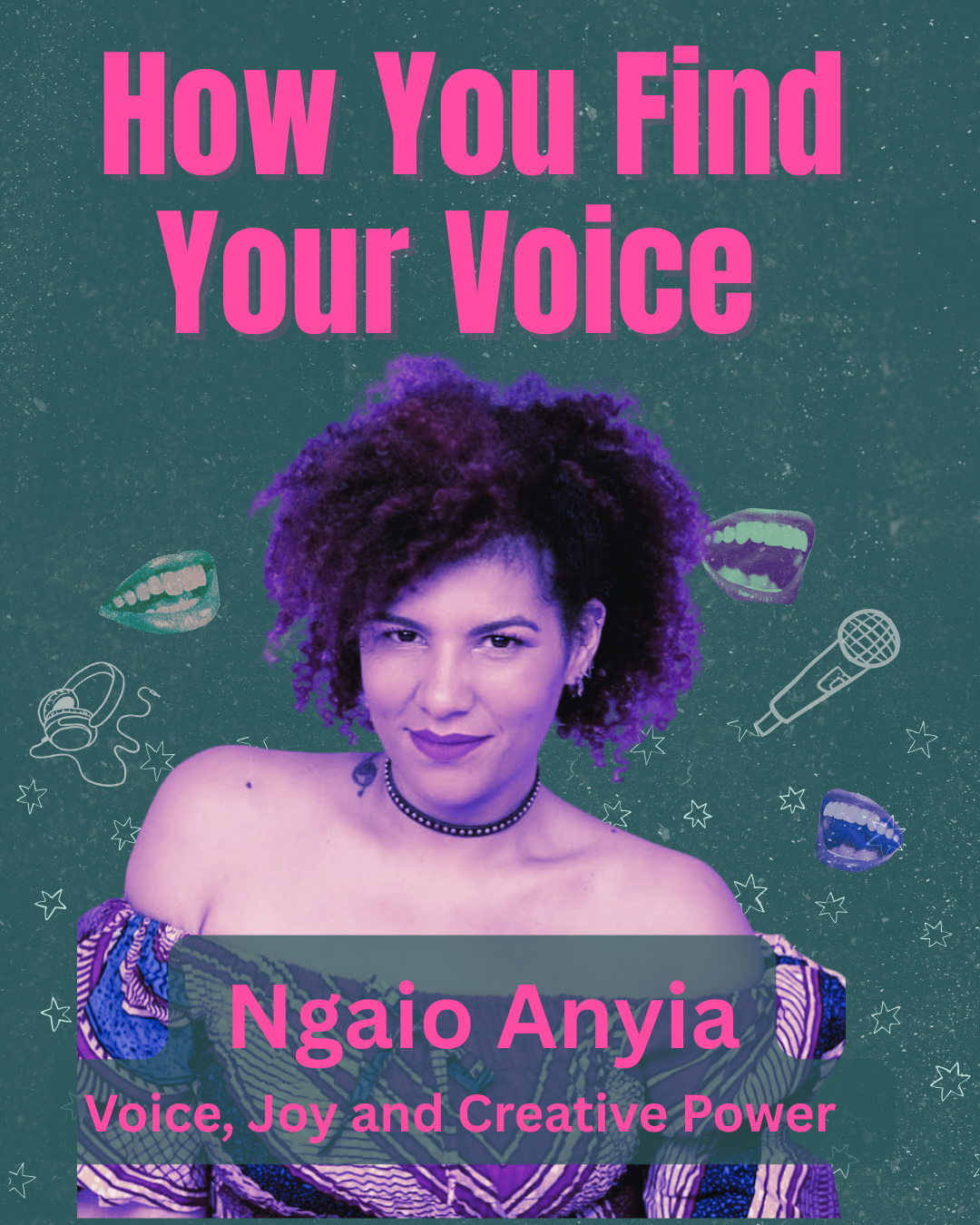
Ngaio Anyia HYFYV episode artwork
Losing Your Voice
Ngaio’s relationship with voice began early, and not gently. As a child, after sustained bullying, she stopped speaking almost entirely. Her mum only realised something was wrong when she noticed how quiet her daughter had become. What struck me wasn’t simply the silence, but where all that energy went instead: into books, writing and music. Even now, Ngaio talks about herself as extroverted in many ways, yet someone who needs real quiet to recuperate after performing. I suppose part of me assumed that gifted performers and extrovert types lived off the buzz of live performance; that it doesn’t cost them as much as (us) introverts. So I found that really interesting.
Voice loss returned later, this time physically. After vocal strain, she was told to stop speaking for months or risk long-term damage. For a singer, that’s devastating. And yet she didn’t step away from music, but instead moved sideways into DJing. Her creativity needed expression, or she’d go mad, as she explains. As her voice recovered, she began layering live vocals into DJ sets, and from there moved further into production, pulling her own tracks apart and rebuilding them from the inside. By losing her voice, she actually ended up accessing a different form of creativity, one that allowed her more creative control
Why it’s important to mix things up creatively
We talked about authorship and the producer gap that still shapes so much of the music industry. Ngaio pointed out how few women are credited as music producers, and how that changes everything from the way a track sounds, to questions of power and who gets listened to. She talks about how she wanted to pursue producing for all of those reasons and so that she wasn’t stuck in the vocalist lane; brought in for a hook while the weightier decisions happen elsewhere.
Another thread I loved was her matter-of-factness about time and ageing. She explained that her voice doesn’t sound the same now as it did when she was eighteen. The range might be similar, but the texture and delivery have changed with age and experience. It sounds obvious written down, but it disrupts the cultural narrative that artists arrive early, fully formed, and then remain fixed there.
What advice does she have about finding your voice?
Towards the end of our conversation, I asked what she’d say to a woman trying to find her voice again. She said that she should start with joy. That the focus shouldn’t be on what performs well or looks impressive; not what you think you should be doing, but what actually lights you up. She talked about taking herself on solo artist dates, inspired by the Artist’s Way (the circus, a photography exhibition). These are small acts of creative refuelling that have nothing to do with output.
I didn’t come away from this episode with a neat story about confidence gained. I came away with something truer: voice doesn’t stay put. Bodies change. Life intervenes. Sometimes you lose your voice and you have to find another route back to yourself, and when you return, you might not sound the same. The main take-away is that you don’t “find your voice” once and for all, but it’s an ever-evolving process that changes as you do.
Listen to the full conversation with Ngaio Anyia on the How You Find Your Voice podcast here.