
Sonia Purnell on Kingmaker, power and the woman history chose to forget.
I was joined by award-winning biographer Sonia Purnell to talk about her latest biography, Kingmaker. It’s a gripping account of the life of Pamela Churchill Harriman, a woman who operated at the very centre of 20th-century power and yet remains largely absent from the historical record.
Pamela’s life reads like fiction. She moved from a failed debutante season to the heart of wartime diplomacy, from Churchill’s inner circle to the making of an American president. But Kingmaker is not interested in glamour for its own sake. It asks harder questions about power, gender, invisibility, and the roles women were permitted to play when formal authority was denied to them.
This conversation explores Pamela’s extraordinary influence, Sonia’s five-year research process, and why certain women are remembered as footnotes rather than as forces in their own right.
Who was Pamela Churchill Harriman?
Born Pamela Digby into a financially precarious aristocratic family, Pamela was raised to marry well rather than think deeply. She was discouraged from education, shielded from politics, and groomed for social survival rather than intellectual independence.
And yet, from a young age, she was intensely curious about the world, especially politics and power. Sent to Munich in 1937 as a teenager, she became fascinated not by dances or suitors but by the rise of Nazism. This early political alertness set her apart and marked her out as strange within her own class.
Her first marriage, to Winston Churchill’s son Randolph, placed her at the centre of power just as the Second World War began. From there, her life changed irrevocably.
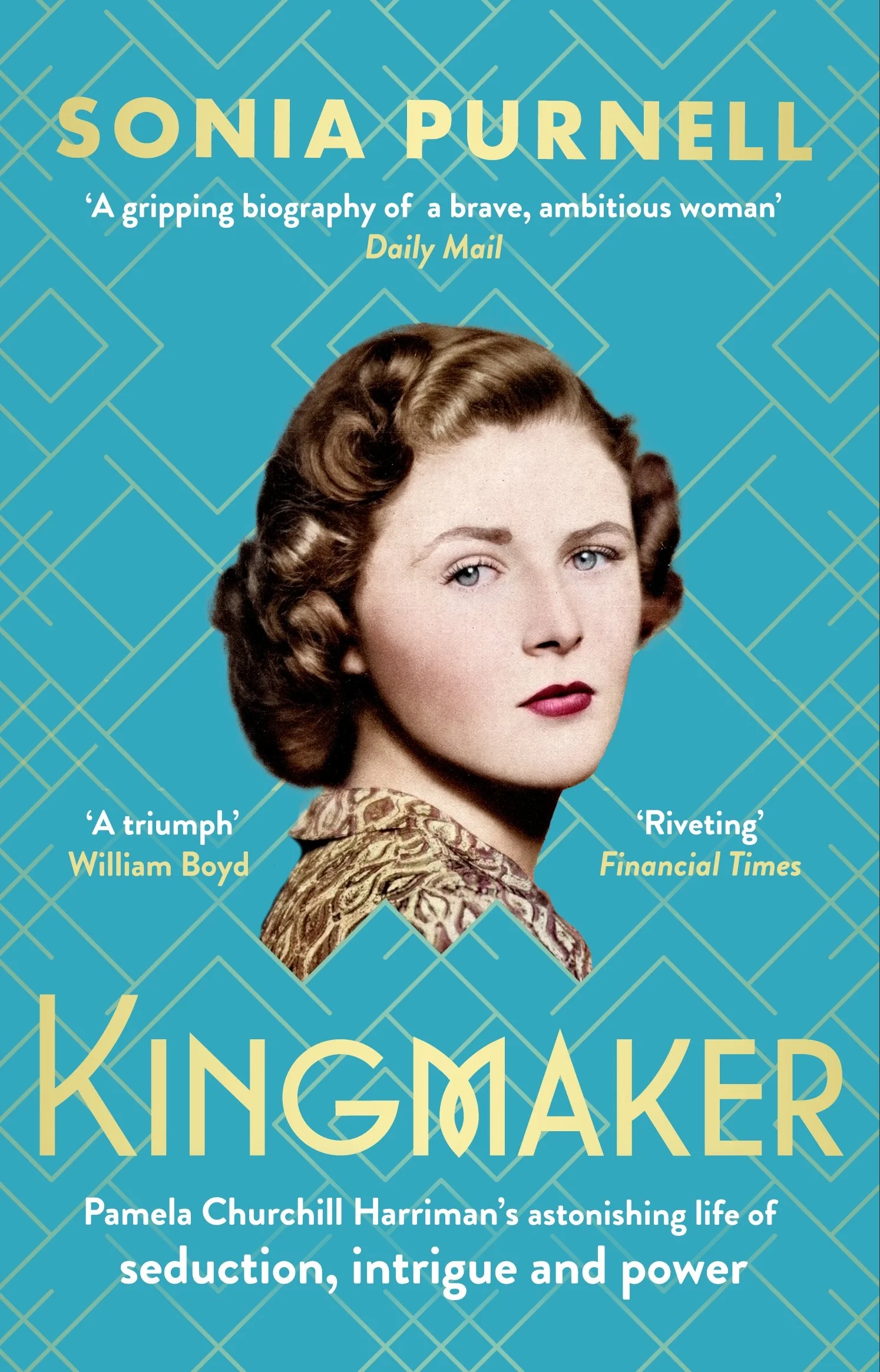
Kingmaker Cover art
What we talk about in this episode
How Pamela became an informal but crucial diplomatic asset during the Second World War
The role she played in securing and sustaining Anglo-American relations
Why Churchill and Clementine actively supported her wartime work
The idea of a “strategic sex life” and what it reveals about women’s agency under constraint
Why Pamela struggled after the war, when women were pushed back out of public power
Her later influence on American politics, including Bill Clinton’s rise to the presidency
How she helped shape peace efforts in Bosnia while serving as US ambassador to France
Why misogyny and moral judgement obscured her achievements for decades
A moment that stayed with me
Sonia describes Pamela as “invisible but decisive”. It is a phrase that explains both her power and her erasure.
Pamela rarely sought the spotlight. She operated through relationships, trust, emotional intelligence, and an acute understanding of how power actually moves. She knew which egos needed soothing, which alliances needed shoring up, and when history demanded intervention rather than restraint.
Because this work happened behind closed doors, it was easy to dismiss her as a social climber or seductress. What Kingmaker makes clear is that this dismissal was not accidental, it was systemic and deliberate.
Why Pamela’s story matters now
Pamela Churchill Harriman spent her life trying to prevent conflict, or to bring it to an end once it had begun. From the Second World War through the Cold War and into the 1990s, she worked to stabilise alliances in moments of extreme political fracture.
As Sonia points out, the resonances with the present are uncomfortable. Rising extremism, democratic fragility, misinformation, and geopolitical tension all echo the periods Pamela lived through.
Her story forces us to ask who gets written into history, and who is written out. And how many women like Pamela shaped the world without ever being granted official credit.
Listen to the full episode
How You Find Your Voice podcast artwork featuring Sonia Purnell
You can listen to the full conversation with Sonia Purnell on the How You Find Your Voice podcast here.
This episode is for anyone interested in women’s history, power behind the scenes, and the stories that only surface when someone is willing to look properly.